






Thailand, known as the “Rice Bowl of Asia,” has a rice milling industry that is both historically significant and technologically evolving. For anyone looking to invest in or upgrade their milling operations, understanding the rice milling machine Thailand landscape is essential. Thailand is one of the world’s leading rice producers and exporters, with an estimated 20.7 million metric tons of milled rice production forecast for MY 2025/26. The country’s rice milling industry processes approximately 20–22 million tonnes of paddy annually, with about 8–10 million tonnes destined for export. This massive scale of operations creates a robust and dynamic market for rice milling machinery.
The Thailand Rice Milling Market was valued at approximately USD 240 million in 2025 and is projected to reach USD 275 million by 2032, growing at a CAGR of 2.0%. This steady growth reflects the country’s enduring role as a global rice powerhouse and the increasing need for modernization across its milling sector.
In this comprehensive guide, we will explore the rice milling machine Thailand market in depth—covering the types of equipment available, key domestic manufacturers, market trends, pricing, and the unique characteristics of Thai rice that influence milling technology. Whether you are a small-scale community miller or a large industrial processor, this guide will help you navigate the rice milling machine Thailand landscape with confidence.
Rice Milling Importance in Thailand
Rice is more than just a staple food in Thailand—it is the backbone of the country’s agricultural economy and a cornerstone of its cultural identity. Thailand is consistently among the world’s top rice exporters, with fragrant Jasmine rice (ข้าวหอมมะลิ) being particularly renowned in international markets. The quality of exported rice depends heavily on the efficiency and precision of the milling process.
The Thai rice milling industry is vast and diverse, ranging from small community-based mills (โรงสีข้าวชุมชน) to large-scale industrial facilities equipped with state-of-the-art technology. According to industry data, Thailand has an estimated 35,000–40,000 active rice mills, creating a substantial installed base that drives ongoing demand for replacement and upgrade equipment. This extensive network of mills means that the rice milling machine Thailand market serves a wide spectrum of customers—from rural farmers with small-scale needs to export-oriented conglomerates requiring high-capacity industrial lines.
The government has also played a significant role in shaping the industry. Initiatives to promote sustainable agricultural practices and technological advancements in rice milling machinery have contributed to market growth. Additionally, policies aimed at boosting agricultural productivity have driven investments in modern milling technology. As the industry moves toward “Agricultural Processing 4.0,” there is a growing emphasis on automation, IoT integration, and AI-driven efficiency improvements.
Types of Rice Milling Machines in Thailand
The rice milling machine Thailand market offers a wide variety of equipment types, each designed for specific stages of the milling process and different scales of operation. Understanding these categories is crucial for making informed purchasing decisions.
Paddy Husker (เครื่องกระเทาะข้าวเปลือก)
The husking process is the first critical step in rice milling, where the outer husk is removed from the paddy grain. In Thailand, several types of huskers are commonly used:
- Rubber-roller huskers (ลูกยางกระเทาะข้าว): These are increasingly popular in modern mills due to their superior husking efficiency and lower grain breakage. Many newer Thai machines, such as the “ทองทวี” (Tongtrawee) rice mill, utilize rubber rollers for husking. The rubber-roller design allows for gentler processing, which is particularly important for premium rice varieties like Jasmine rice.
- Under-runner disc huskers: This traditional stone mill-type husker has been widely used in Thailand. In this design, only the lower of two disk-type emery stones rotates, and the paddy is husked as it passes through the gap between the stones. While effective, these machines are generally less efficient than rubber-roller alternatives.
- Vertical cone huskers: Popular in traditional rice milling systems in Thailand, these machines consist of a cone-shaped iron cast cylinder coated with an abrasive material. They are still found in many conventional mills, particularly in rural areas.
Paddy Separator (เครื่องแยกข้าวเปลือก)
After husking, the paddy separator is used to separate unhusked paddy from husked rice. In Thailand, the paddy separators used in conventional mills are often German-designed compartment-type separators. These separators rely on differences in specific gravity and elasticity between paddy and brown rice to achieve separation. The unhusked paddy is returned to the husker for a second pass, ensuring maximum efficiency.
Rice Whitener (เครื่องขัดขาว)
The whitening process removes the bran layers from brown rice to produce white rice. The vertical whitening cone has been the popular equipment in Thailand’s traditional rice milling system. These machines consist of a cone-shaped iron cast cylinder coated with an abrasive material that gradually removes the bran layers.
Modern rice milling operations in Thailand increasingly use horizontal friction-type rice whiteners, which offer more consistent whitening results and better control over the degree of milling. Some advanced systems incorporate two or three whiteners in sequence to reduce broken rice and milling loss by enabling a gradual transition from brown rice to white rice.
Rice Polisher (เครื่องขัดมัน)
Polishing gives milled rice a smooth, shiny appearance that is highly valued in both domestic and export markets. Rice polishers use friction and gentle abrasion to polish the surface of the rice kernels, enhancing their visual appeal and market value. The Thailand Rice Polisher Market is an important segment of the broader rice milling machinery industry.
Rice Color Sorter (เครื่องคัดสีข้าว)
Color sorting has become increasingly essential in modern rice milling, particularly for export-oriented operations. These machines use optical sensors to detect and remove discolored, damaged, or foreign grains from the rice stream. Thailand has developed its own color sorting technology, such as the TZORT (Thai Rice Color Sorter), which is designed to remove contaminants from the rice milling process to increase quality and value. The global rice color sorting machine market was estimated at USD 620 million in 2024 and continues to grow at a significant rate.
Complete Milling Systems
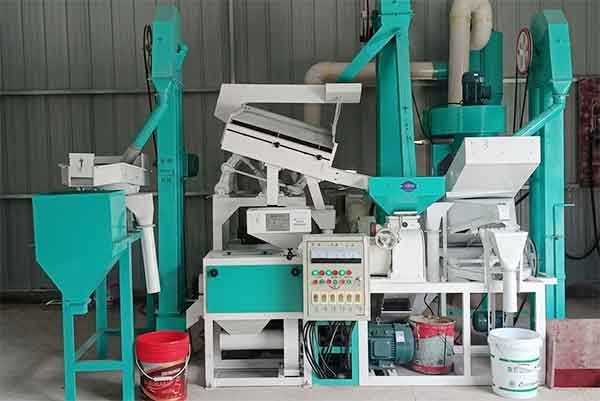
For larger operations, complete rice milling systems integrate all these stages into a seamless production line. The REACH SYSTEM, for example, is a semi-assembled rice milling plant incorporating receiving, pre-cleaning, husking, milling, optical sorting, and packing stage equipment. The SYSTEM 7.0, a seven-ton-per-hour rice mill, is best suited for medium-sized rice milling facilities with 25,000 to 40,000 tons of annual capacity.
Thai Rice Features and Their Impact on Milling
Thai rice varieties, particularly Jasmine rice (ข้าวหอมมะลิ), have unique characteristics that influence the design and selection of rice milling machine Thailand equipment.
Thai Jasmine rice is known for its long, slender grains, delicate fragrance, and soft texture when cooked. These characteristics require careful handling during milling to preserve grain integrity and quality. The rice milling process must be gentle enough to avoid excessive breakage while still effectively removing the husk and bran layers.
Small-scale farming with different varieties of rice is common in rural Thailand, which can complicate the milling process and affect production yield. This diversity has driven the development of versatile milling machines capable of handling various rice varieties.
The high logistical cost of transporting paddy to commercial mills has also been a barrier for small-scale farmers. This has created demand for compact, user-friendly small-scale rice mills that can be operated at the community or even household level.
A notable example of such innovation is the compact and highly efficient small-scale rice mill machine developed for Ban Samkha village in Thailand. This machine consists of five main units: a double-layer oscillating sieve cleaner, a rubber-roller husker and aspirator, a compartment-type paddy separator, two horizontal friction-type rice whiteners, and oscillating grading sieves. It runs on single-phase motors with a capacity of 200 kg of paddy per hour and achieves an average milling recovery of about 65% across various varieties of local Thai rice.
Pricing and Investment Considerations
The rice milling machine Thailand market offers equipment at various price points to suit different budgets and operational scales.
For small-scale and household machines:
- The CLP CR-150 ECO is priced at 14,900 baht, while the dual-function model costs 19,500 baht.
- Small rice milling machines from local manufacturers are available for approximately 80,000 baht.
For community and medium-scale operations:
- The CLP CMF-201, a complete system with cleaning, husking, polishing, and sorting capabilities, is priced at 340,000 baht.
- Standard-grade, manually operated machines of 2–4 tons per hour capacity typically trade around 1.2–2.5 million baht.
For large-scale industrial operations:
- Premium German and Japanese machines command a 30–50% price premium over comparable Chinese models.
- Fully automated, PLC-controlled units with integrated color sorters can exceed 6 million baht.
- Pricing for debranning machines ranges from approximately 600,000 baht to 8 million baht per machine depending on capacity, automation level, and brand.
When evaluating the cost of a rice milling machine Thailand, several factors should be considered beyond the initial purchase price. These include installation costs, ongoing maintenance, spare parts availability, energy consumption, and the level of after-sales support provided by the manufacturer or supplier.
Market Trends and Future Outlook
The Thailand Rice Milling Machinery Market is experiencing several significant trends that are shaping the future of the industry.
Shift Toward Automation and Digitalization
The market is witnessing a clear shift toward advanced technologies such as automation, IoT, and AI to improve efficiency and productivity in rice milling operations. Manufacturers are focusing on developing innovative machinery that can cater to the diverse needs of rice millers in Thailand. The integration of electronics—including PLC-based control, load sensors, motor drives with variable frequency, and remote monitoring—is becoming standard on mid-range and premium machines.
Sustainability and Environmental Considerations
There is a rising trend toward sustainable and eco-friendly rice milling machinery to align with the country’s environmental goals. This includes equipment designed for lower energy consumption, reduced emissions, and improved waste management.
Quality Focus for Export Markets
Regulatory pressure around food safety and traceability, particularly for export-oriented mills supplying to the EU, Japan, and the US, is accelerating purchases of machines with stainless steel contact parts, CIP-ready designs, and digital batch recording. Compliance-ready models now command a 10–15% price premium and are the fastest-growing sub-segment.
Adoption of Multi-Stage Processes
Rising demand for high-yield, low-breakage milling is driving a shift from traditional single-pass friction debranning to multi-stage abrasive and hybrid processes. Adoption of two- and three-pass debranning configurations, which reduce broken rice by 3–5 percentage points compared to single-pass systems, is projected to increase from roughly 20% of new installations in 2026 to over 40% by 2035.
Growing Domestic and Export Demand
The Thailand Rice Milling Market continues to grow, driven by increasing consumer demand for high-quality rice and advancements in milling technology. The market is expected to reach USD 275 million by 2032. Opportunities lie in offering cost-effective solutions, providing after-sales services, and establishing strategic partnerships with local rice millers.
Challenges
Despite the positive outlook, the market faces several challenges. These include intense competition among manufacturers leading to pricing pressures, rapidly changing technology requiring continuous innovation and upgrades, fluctuating raw material prices impacting production costs, and the need for efficient distribution channels to reach remote rural areas where rice mills are located. Additionally, government regulations and policies related to agriculture and trade can impact the overall business environment. The high upfront capital cost and limited access to equipment financing for small and medium rice mills (which represent over 60% of the market) remain significant barriers.
Summary
The rice milling machine Thailand market is a dynamic and evolving sector that plays a vital role in one of the world’s most important rice-producing nations. With an estimated 35,000–40,000 active rice mills, Thailand offers a substantial and diverse market for rice milling equipment. The country’s rice milling industry processes approximately 20–22 million tonnes of paddy annually, supporting a market valued at USD 240 million in 2025 that is projected to reach USD 275 million by 2032.
The equipment landscape ranges from traditional under-runner disc huskers and vertical whitening cones to modern rubber-roller huskers, automated PLC-controlled systems, and advanced color sorters.
The market is shifting toward automation, IoT integration, and AI-driven efficiency, driven by the need to meet export quality standards and reduce operational costs. Sustainability is becoming increasingly important, and multi-stage milling processes are being adopted to reduce breakage and improve yield.
For investors and millers, understanding the unique characteristics of Thai rice—particularly Jasmine rice (ข้าวหอมมะลิ)—and the specific requirements of the local market is essential for making informed decisions. From small household machines priced at under 20,000 baht to fully automated industrial systems exceeding 6 million baht, the rice milling machine Thailand market offers solutions for every scale of operation.
As Thailand continues to modernize its agricultural sector and strengthen its position in the global rice market, the demand for efficient, high-quality rice milling machinery will only grow. Whether you are a community miller, a medium-scale processor, or a large export-oriented operation, investing in the right rice milling machine is essential for success in Thailand’s competitive rice industry.
We Want to Hear From You!
Did you find this comprehensive guide on the rice milling machine Thailand market helpful? Do you have specific questions about choosing the right equipment, comparing suppliers, or understanding the local market dynamics? We’d love to hear your thoughts!
📝 Leave a comment below – share your experience with rice milling in Thailand, ask questions, or let us know what topics you’d like us to cover next. Whether you’re a local miller, an international investor, or simply interested in Thailand’s rice industry, your insights help our entire community make better-informed decisions.
📤 Share this post – if you found this information valuable, please share it with your network on Facebook, LinkedIn, Twitter, or WhatsApp. Help other rice industry professionals, farmers, and entrepreneurs navigate the rice milling machine Thailand market with confidence!