



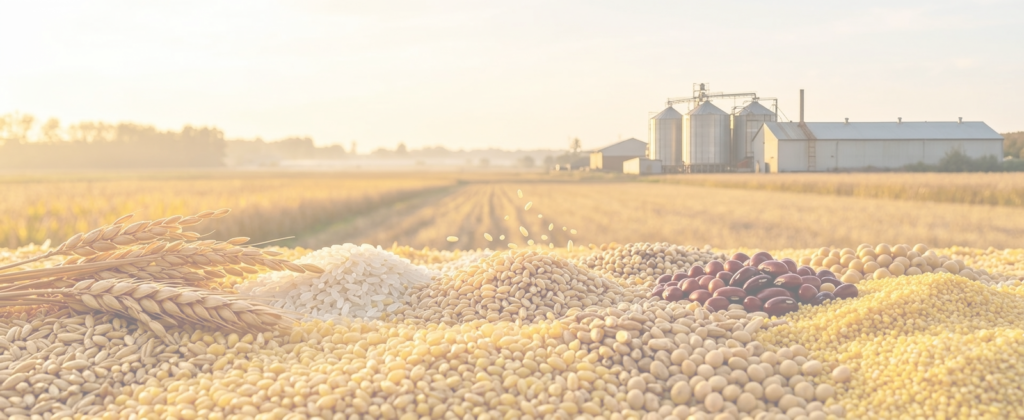
Amillet processing line is the essential production system for transforming raw millet grains into high-quality milled millet for human consumption. As millet gains global recognition as a nutritious, gluten-free ancient grain, the demand for efficient, reliable millet processing equipment continues to grow across Africa, Asia, and beyond.
This collection page presents three proven millet processing line solutions ranging from40 tons per day (TPD) to 120 TPD, each designed to meet different production scales, investment budgets, and market demands. Processing capacities from 20 TPD up to 500 TPD are available upon request.
Our millet processing lines adopt advanced multi-stage light milling technology, delivering high yield, low broken millet rate, purified end products, and even granularity. The total milled millet yield rate typically reaches70–75% , with damage rate below1%
Complete Millet Processing Flow
A complete millet processing line integrates multiple processing stages into one coordinated system:
Raw Millet Receiving → Cleaning → Destoning → Hulling → Husk Separation → Milling (Whitening) → Polishing → Grading → Color Sorting → Packaging
1. Cleaning Section
The raw millet undergoes screening, magnetic separation, and destoning to remove impurities including dust, stones, soil, and straw. The system adopts once screening, once magnetic separation, and twice destoning to clean the raw millets thoroughly.
2. Hulling (Dehulling) Section
Advanced hulling technology accurately removes the outer husks from millet grains while minimizing damage to the kernels. Multi-pass light hulling is applied to decrease the millet breaking rate and increase total purified yields.
3. Husk Separation
The hulled millet passes through husk separation equipment that utilizes the difference in suspension velocity between husks and grains to achieve clean separation.
4. Milling (Whitening) Section
Multiple passes of milling (typically three times of peeling, whitening, and polishing) produce millet with the desired whiteness and polish. The milling process can be adjusted to produce different precision grades according to market requirements.
5. Polishing Section
Polishing further enhances the appearance and glossiness of millet grains while removing minute surface impurities. Water-mist polishing technology promotes the formation of a glossy surface layer and extends shelf life.
6. Grading Section
Vibrating classifiers separate millet grains by size and shape, producing different grades for various market channels. Broken millet and bran are also separated for by-product utilization.
7. Color Sorting Section
AI-powered optical recognition technology identifies and removes discolored grains (yellow grains, black grains, diseased spots), ensuring product purity and quality consistency.
8. Packaging Section
Fully automatic weighing and packaging machines complete the production line, supporting customization for specifications ranging from 5kg to 25kg with precision of ±0.5%
Millet Processing Unit Core Seris
1. 40T/D Millet Processing Line
| Item | Details |
|---|---|
| Kapasiteit | 40 tons/24h |
| Application | Small & medium millet mills |
| Advantages | Compact, flexible, cost-effective |
Ideal for: Small processors serving local millet markets.
Learn More About 40T/D Millet Processing Line →
2. 100T/D Millet Processing Line
| Item | Details |
|---|---|
| Kapasiteit | 100 tons/24h |
| Application | Large commercial millet mills |
| Advantages | High capacity, efficient processing |
Ideal for: Commercial mills requiring stable large-volume production.
Learn More About 100T/D Millet Processing Line →
3. 120T/D Millet Processing Line
| Item | Details |
|---|---|
| Kapasiteit | 120 tons/24h |
| Application | Industrial millet processing |
| Advantages | High throughput, automated handling |
Ideal for: Large-scale processors targeting regional markets.
Learn More About 120T/D Millet Processing Line →
Millet Processing Plant Applications & Markets
Africa
Millet is a staple grain across the Sahel region and East Africa. A 40 TPD line is suitable for regional processors, while 100 TPD and 120 TPD solutions serve large-scale commercial production.
Asia
From India to China, millet processing is a growing industry. Our solutions are designed to handle various millet varieties including finger millet, pearl millet, foxtail millet, proso millet, and barnyard millet.
South America & Europe
As the global demand for gluten-free and ancient grains rises, millet processing facilities are emerging in new markets. Our equipment can be configured to meet local quality standards and product specifications.
Why Choose Our Millet Processing Lines?
Customized Processing Capacity
We provide 40 TPD, 100 TPD, en 120 TPD millet processing line solutions, allowing customers to select a capacity that matches their raw material supply and market demand. Capacities from 20 TPD to 500 TPD are also available.
Complete Processing Solution
The plant integrates cleaning, destoning, hulling, husk separation, milling, polishing, grading, color sorting, and packaging into one coordinated system.
High Yield & Quality
Advanced Technology
- Multi-stage light milling reduces breakage
- Automatic pulse dust collection system
- AI-powered optical color sorting for premium quality
- Electrical control system with overpressure, undervoltage, and electrical shock protection
- Sanitary and secure auto pulse dedusting system with low noise and no pollution
Turnkey Project Services
From capacity selection and process design to equipment manufacturing, installation, commissioning, and operator training, we provide comprehensive technical support throughout the project.
How to Choose the Right Millet Processing Line Capacity?
Choosing the right capacity should consider multiple factors:
Raw Millet Availability
If your local millet supply is limited or seasonal, a smaller plant may provide better equipment utilization.
Market Demand
Estimate the actual demand for milled millet in your target market before selecting a 100 TPD or 120 TPD production line.
Investment Budget
Higher-capacity plants generally require greater investment in equipment, factory space, utilities, storage, and material handling.
Finished Product Requirements
Different millet varieties and precision grades may require different milling and grading configurations.
Future Expansion
If you expect demand to increase, choosing a scalable plant configuration can make future expansion easier.
Millet Processing Line Project Customization
Every millet processing project has different raw material and market conditions. Before designing the plant, we typically consider:
- Required processing capacity
- Raw millet variety (finger millet, pearl millet, foxtail millet, proso millet, barnyard millet, sorghum, etc.)
- Initial millet moisture
- Desired millet precision / whiteness grade
- Finished product packaging requirements
- Factory dimensions and layout
- Available electricity supply
- Automation requirements
- Target investment budget
Based on this information, we recommend a suitable millet processing process and equipment configuration.
Millet Processing Equipment FAQ
What capacity millet processing lines do you provide?
We provide millet processing line solutions with processing capacities of 40 TPD, 100 TPD, en 120 TPD. Other capacities from 20 TPD to 500 TPD can also be considered according to project requirements.
What types of millet can be processed?
Our lines can process various millet varieties including finger millet, pearl millet, foxtail millet, proso millet, barnyard millet, en sorghum.
What is the yield rate?
The net milled millet yield rate is 70–75%, with skins and husks accounting for 25–30% and damage rate below 1%.
What are the raw material requirements?
Raw millet should have moisture content ≤15% and impurity rate ≤1.5%.
Can the line produce different grades of millet?
Yes. The grading and color sorting systems can be configured to produce different millet grades according to customer requirements.
Can you design the factory layout?
Yes. We provide equipment layout planning according to the customer’s available factory dimensions and required processing flow.
Can the line include packaging equipment?
Yes. Automatic or semi-automatic packaging systems can be integrated into the complete processing line.
Can you provide installation and commissioning support?
Yes. Technical installation, commissioning, operator training, and after-sales support can be arranged according to project requirements.
Get a Millet Processing Line Solution for Your Business
Choosing the right millet processing line requires more than simply selecting a processing capacity. The milling process, millet variety, product specification, factory layout, utility conditions, and target market should all be considered together.
Whether you are looking for a 40 TPD, 100 TPD, or 120 TPD millet processing line, our engineering team can help you develop a suitable solution based on your actual project requirements.
Tell us your required capacity, millet type, desired finished products, factory size, and target market. We will recommend a suitable millet processing line configuration for your project.
This collection page covers our standard 40 TPD, 100 TPD, en 120 TPD millet processing line solutions. Custom capacities from 20 TPD to 500 TPD are also available upon request.