




Description
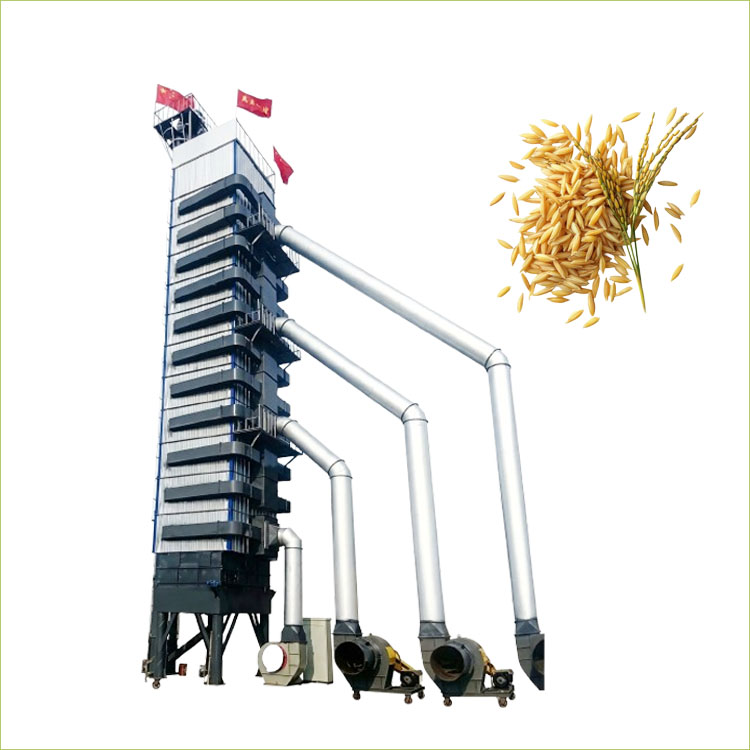
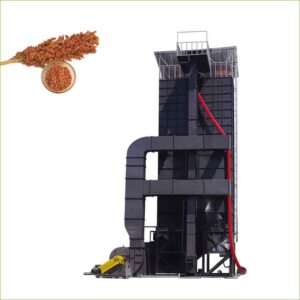
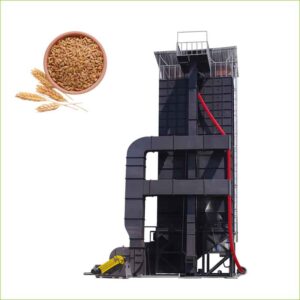
The Industrial Rice Dryer Machine For Grain Paddy With 10 T/h is a high-capacity, continuous-flow drying system engineered specifically for processing freshly harvested paddy rice at an industrial scale. With a throughput capacity of 10 metric tons per hour, this machine is designed to address one of the most critical post-harvest challenges in rice production: the safe and efficient reduction of moisture content from freshly harvested paddy (typically 20–26% moisture) down to the optimal storage level of 13–14%. Unlike generic grain dryers, this unit is purpose-built around the unique physical and biological characteristics of rice paddy — its fragile husk, its susceptibility to fissuring (stress cracks), and its need for gentle, uniform heat application to preserve milling yield and grain quality.
Grain Dryer Machine Working Principle
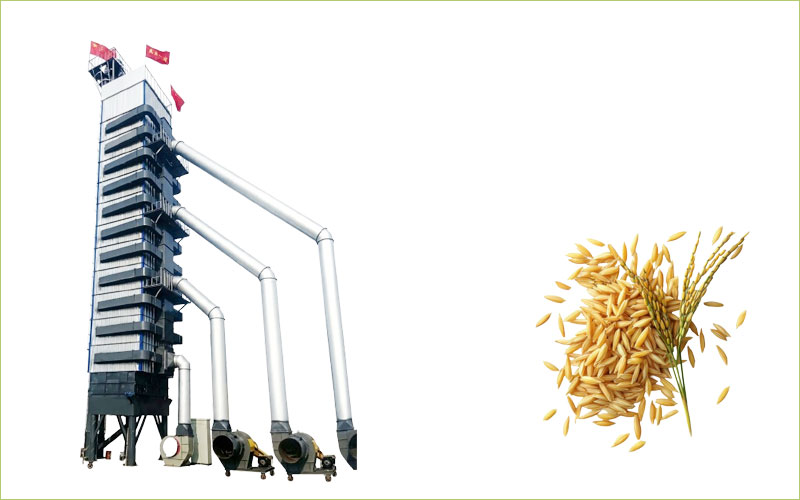
This rice dryer operates on the principle of low-temperature, mixed-flow drying. The wet paddy enters from the top holding section and flows downward by gravity through a series of alternating layers of hot air inlet ducts and exhaust air ducts. A clean biomass furnace or diesel burner heats the air to a precisely controlled temperature (typically 40–60°C), which is then forced by centrifugal fans through the moving grain column. Moisture is gradually extracted from the grain as it passes through multiple drying and tempering zones. The machine employs a multi-pass drying cycle: after each pass, partially dried paddy undergoes a tempering (resting) period inside the machine, allowing internal moisture to migrate from the kernel center to the surface, preventing moisture gradient-induced cracks. The dried paddy exits from the bottom discharge port at the target moisture content.
Grain Dryer Parameter
| Item / Technical Parameter | Design Value |
| Model Name | AG5HL-200T Continuous Eco-friendly Grain Dryer |
| Structure Type | Continuous Type |
| Drying Method | Direct Heating |
| Drying Process | Concurrent-Counterflow |
| External Dimensions of Dryer Body | 3000 × 4700 × 23600 mm |
| Processing Capacity | 8–10 T/h |
| Moisture Reduction Range | 13%–15% |
| Net Volume of Dryer | 110 m³ |
| Matching Power | 115 kW |
| Hot Air Temperature Range | 45–160 °C |
Paddy Dryer Machine Features
1. Mixed-Flow Tower Design with Multi-Zone Drying
The drying tower is constructed with alternating layers of hot air inlet and exhaust air ducts arranged in a staggered pattern. Paddy flows through multiple temperature-controlled zones, each independently adjustable. This design ensures that every grain receives equal exposure to the drying medium.
2. Low-Temperature Precision Control System (40–60°C)
Equipped with a PLC-based temperature controller and multiple PT-100 thermal sensors distributed across the tower body, the system maintains drying air temperature within ±2°C of the set value. The temperature range is specifically calibrated for paddy rice, never exceeding 65°C at the grain surface.
3. Large-Capacity Holding Section with Auto-Leveling
The top section includes a grain distributor and leveling device that ensures uniform paddy flow across the full cross-section of the tower. This prevents uneven drying caused by channeling or dead zones in the grain column.
4. Built-in Tempering Zones
Between each drying stage, the machine incorporates dedicated tempering sections where no hot air is introduced. Here, the paddy rests while internal moisture redistributes from the kernel core to the outer layers, mimicking the traditional sun-drying rest period.
Rice Dryer Machine Advantages
1. Minimized Head Rice Yield Loss
By operating at low temperatures (40–60°C) and incorporating tempering zones, the dryer drastically reduces the formation of stress cracks and fissures in the rice kernel. Compared to high-temperature drying, the head rice yield (whole kernels after milling) can be preserved at 5–10% higher levels — a direct economic benefit of $5–15 per ton of milled rice.
2. Continuous 24/7 Operation with Stable Output
As a continuous-flow system, the machine runs uninterrupted without batch loading/unloading delays. The 10 T/h capacity translates to 240 tons of paddy processed per day, enabling mills to handle peak harvest volumes without bottlenecks.
3. Uniform Moisture Distribution Across the Batch
The mixed-flow design combined with the auto-leveling distributor ensures that the moisture content variation across different positions in the tower is less than ±0.5%. This consistency is critical for subsequent storage safety and milling uniformity.
4. Fuel-Efficient Operation
The multi-pass drying-tempering cycle recovers residual heat from the exhaust air and preheats incoming air. Coupled with precision temperature control, fuel consumption is typically 15–25% lower than comparable single-pass or high-temperature rotary dryers.
Grain Drying Machine Benefits
1. Higher Milling Profits for Rice Millers
A 5–10% improvement in head rice recovery directly translates into greater revenue. For a mill processing 10 tons of paddy per hour, even a 3% increase in whole kernel yield can mean thousands of extra dollars per week — without any increase in raw material cost.
2. Reduced Post-Harvest Losses During Peak Season
During the rainy harvest season, paddy moisture can remain above 20% for days. This dryer’s 10 T/h capacity allows farmers and cooperatives to dry their harvest within hours of reaping, preventing field loss, mold growth, and yellowing that occurs when wet paddy is left untreated.
3. Safer Long-Term Storage Without Chemical Treatment
Rice dried to a uniform 13–14% moisture using this machine can be stored for 6–12 months without mold development or insect infestation, eliminating the need for chemical fumigants. This preserves the rice as an organic or “green” product.
4. Labor Savings and Operational Simplicity
The fully automated PLC control system requires only one operator per shift for monitoring. Loading, drying, tempering, and discharge cycles are all managed automatically, replacing the need for 5–10 laborers previously required for sun-drying or manual batch drying operations.
Conclusion
The Industrial Rice Dryer Machine For Grain Paddy With 10 T/h is not simply a piece of grain drying equipment — it is a complete post-harvest solution engineered around the unique demands of rice. Its low-temperature mixed-flow technology, precise multi-zone control, and integrated tempering stages work in harmony to preserve the structural integrity of each paddy kernel while delivering industrial-scale throughput. The result is measurably higher head rice yields, lower fuel costs, reduced labor dependency, and safer long-term storage — all of which directly improve the bottom line for rice millers, cooperatives, and grain traders.
Every rice variety, harvest condition, and climate zone presents its own drying challenge. That’s why the standard 10 T/h configuration is fully customizable — from burner type and automation level to auxiliary equipment like pre-cleaners, conveyors, and moisture sensors.
📩 Ready to optimize your rice drying process? Leave us a message online with your specific requirements — paddy variety, initial moisture content, desired final moisture, and daily processing target. Our engineering team will provide a tailored quotation and technical proposal within 24 hours. Click the “Leave a Message” button now to start the conversation.
Reviews
There are no reviews yet.